
Kantha Embroidery: The History, Meaning and Story Behind Every Stitch
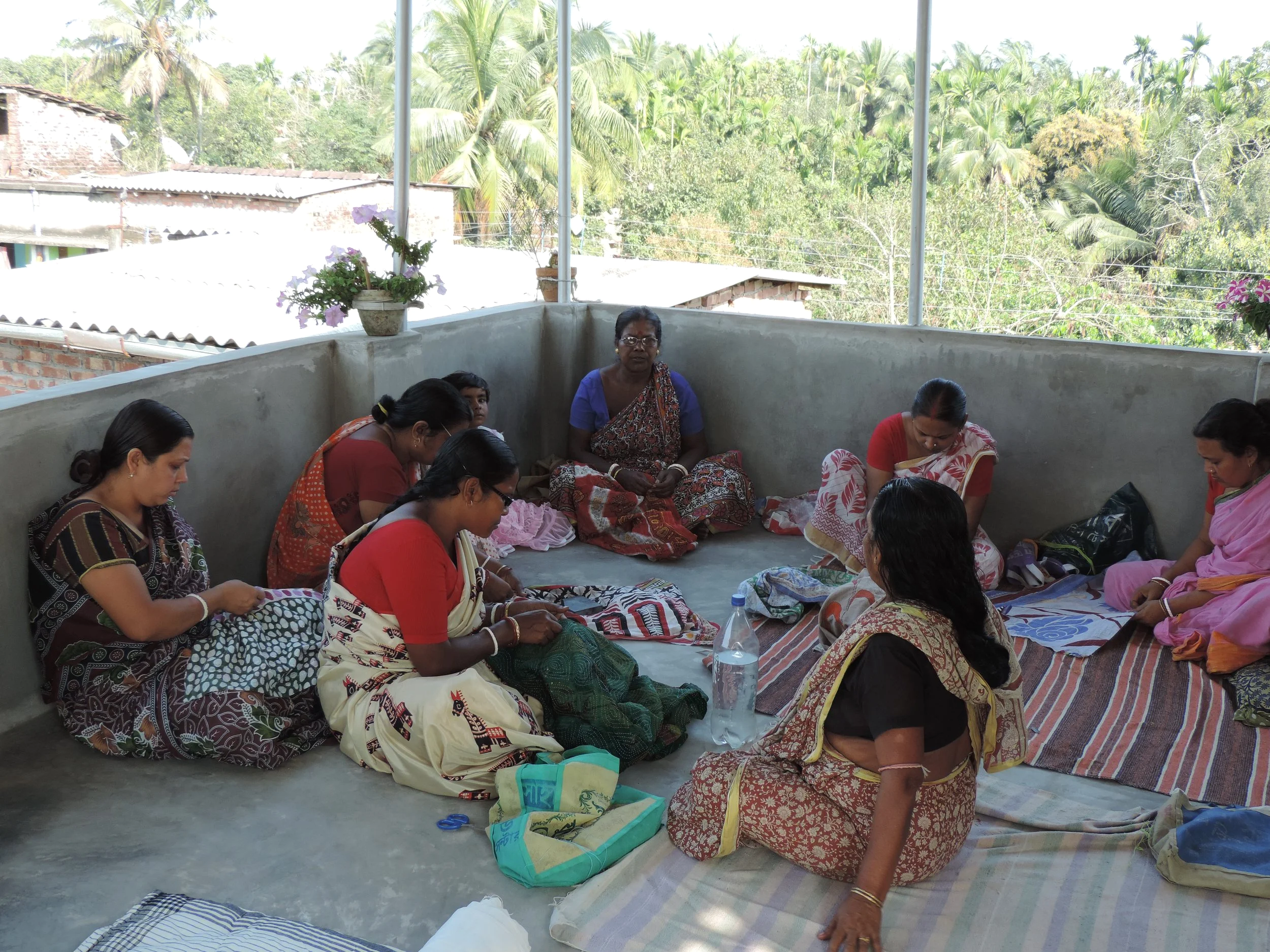
Kantha artisans - Bengal India
Kantha Embroidery: The History, Meaning and Story Behind Every Stitch
Picture this. A courtyard in rural Bengal, the sun finally easing off after a long, hot day. A handful of women sit close together on a woven mat, needles moving without needing to look. Somewhere a radio hums an old film song. Children playing across the yard.
Across their laps lies a pile of vintage silk saris — the kind that once danced through weddings, market mornings, and quiet prayers at the temple.
This is where kantha embroidery is born. Not in a factory or a design studio but in a home. In the small gaps between everything else a woman has to do.
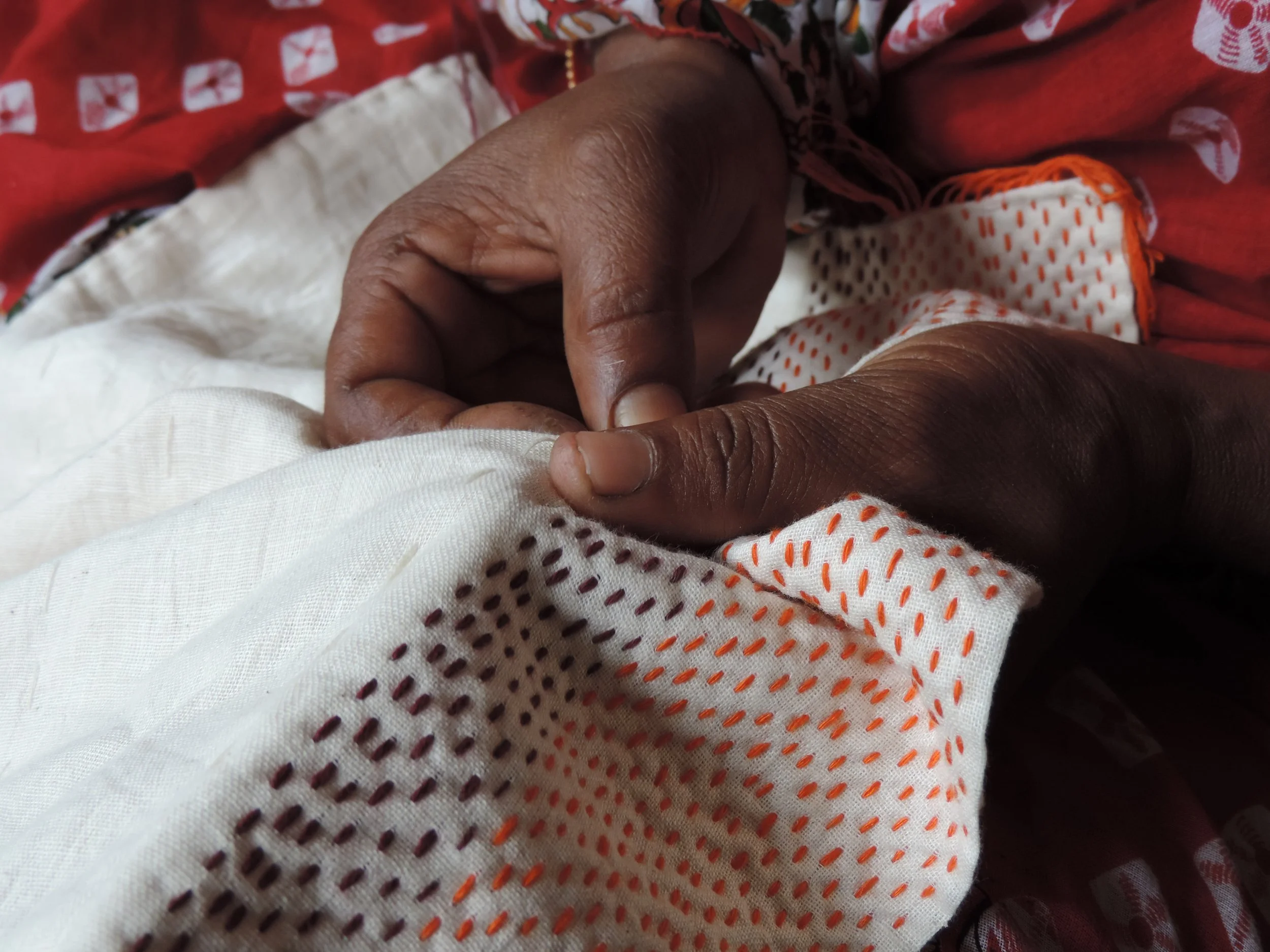
Artisan hands stitching Kantha
More Than a Stitch: What Kantha Embroidery Really Means
Kantha is an age-old Bengali embroidery tradition, where layers of preloved vintage sari or fabric are repurposed and upcycled into quilts, coverlets or throws, using a simple running stitch.
For centuries, kantha wasn't made to be sold or admired from afar. It was made to be lived. A newborn was wrapped in a kantha quilt for protection. A guest was welcomed onto a kantha mat softened by years of feet and hands. Every stitch carried a small piece of somebody's day — a worry, a hope, a memory that needed somewhere to go.
To understand kantha, you have to understand that it was never made for trends. It was made for family.
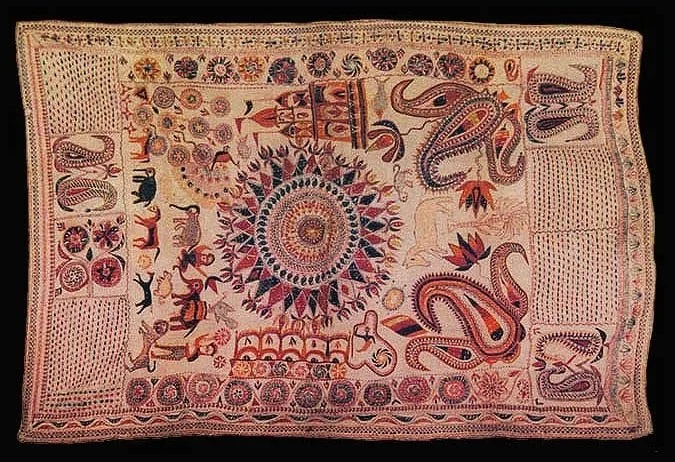
A 19th Century Kantha coverlet with a central Lotus motif and flowers, temples and animals
The History of Kantha Embroidery: A Craft Older Than Memory
Nobody can point to the exact moment kantha began. What we know is that it stretches back over a thousand years, to the earliest chapters of Indian history, in the region we now call Bengal — split today between West Bengal and Bangladesh.
It grew up quietly, tucked into the rhythm of daily life. A woman might pick up her needle while watching over a simmering pot, or while children played nearby, or in the last stretch of daylight before dinner. A single kantha piece could take months to finish. Sometimes years. Sometimes it was never truly "finished" by one person at all — a daughter would pick up where her mother left off, adding her own stitches to a story already in progress.
Old, worn saris were layered on top of one another and stitched together, growing sturdier the more they were used. In this way, a kantha textile became something like a diary — except instead of ink, it was written in cotton and thread, one line at a time, over years.
The word "kantha" describes both the finished cloth and the simple running stitch used to make it. it was never meant to be flawless. Lines wobble. Patterns drift slightly off course. That imperfection is the craft. It's what makes kantha feel alive rather than manufactured.
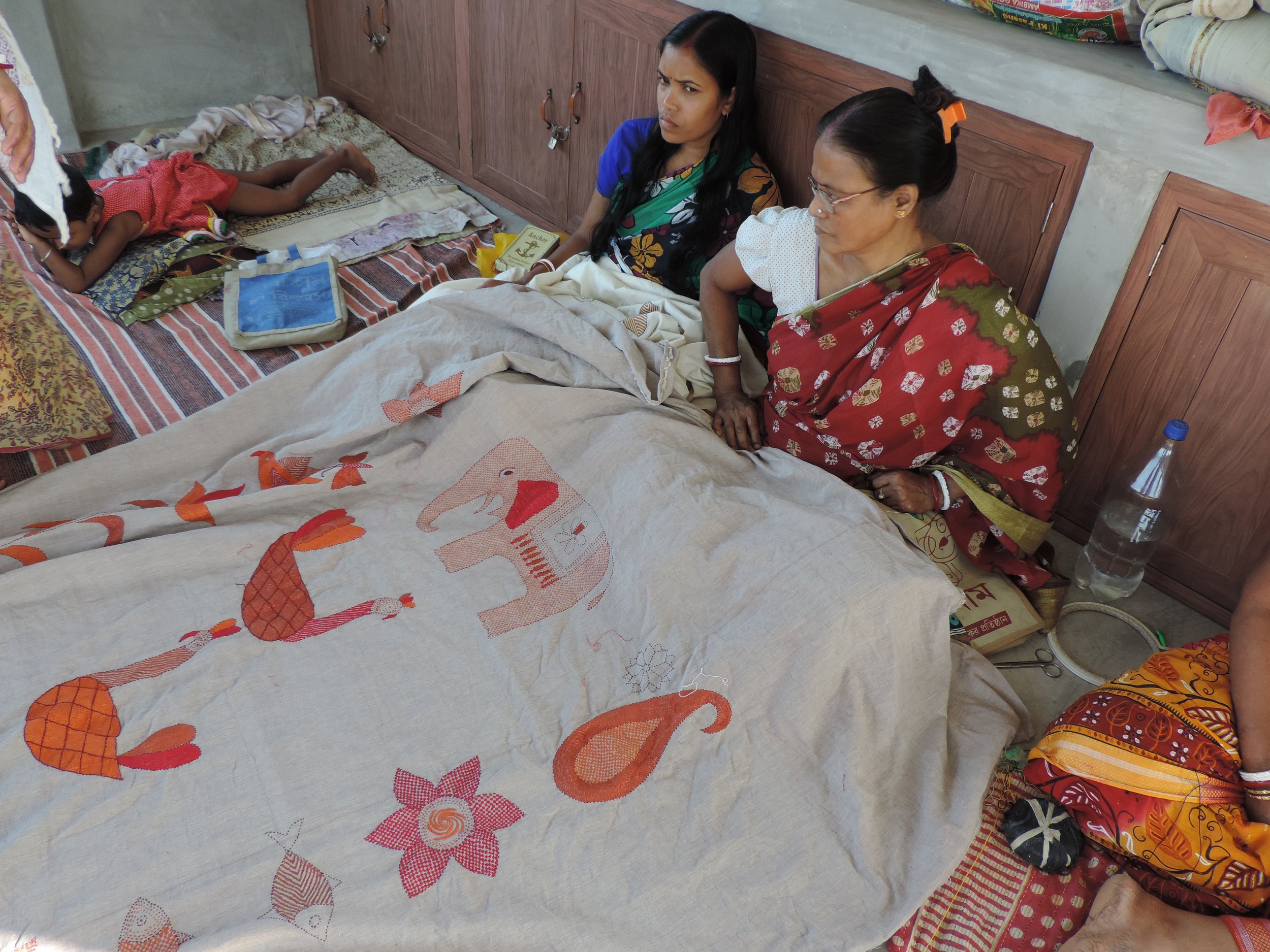
Kantha artisans stitching a Naksha Kantha quilt
Stitching a Whole World Into Cloth: Kantha Symbols and Meaning
Look closely at an old kantha piece and you'll find an entire world stitched into it — flowers, fish, rivers, trees, temples, everyday household objects. Scenes lifted from Hindu epics sit comfortably beside geometric Islamic patterns. The "tree of life" shows up again and again, standing for continuity and protection.
As the craft matured, a grander version emerged called nakshi kantha — bigger, bolder pieces built around a central motif like a blooming lotus or a radiant sun, framed by dense, rhythmic stitching. No two were ever alike, because no two women who made them had lived the same life.
Even outside influence found its way into the thread. When Portuguese traders arrived, ships and coats of arms began appearing in the designs. Some pieces blended faiths entirely — a Hindu god stitched with the gentleness typically given to a Madonna, mythic heroes dressed in European-style clothing. Kantha didn't resist the changing world around it. It simply absorbed it, one stitch at a time, and kept going.
Made for Living, Not for Looking
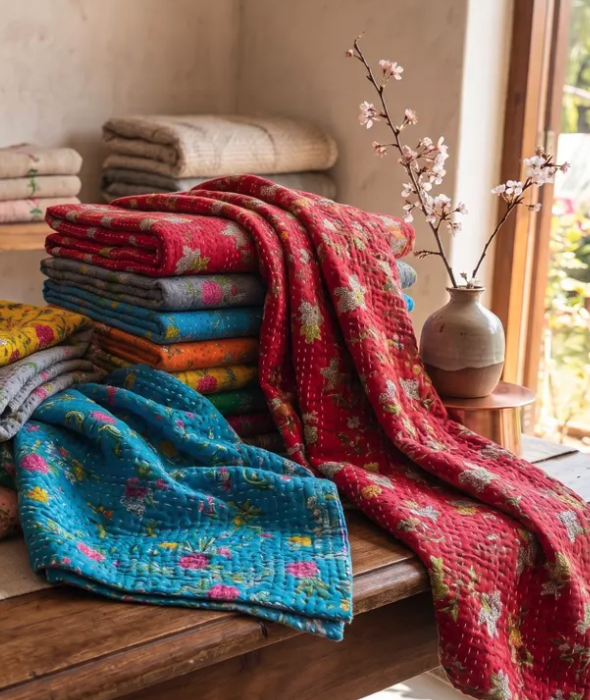
Kantha Quilt from Ruhani Craft
Beyond its beauty, kantha was deeply practical. Layered cotton meant a quilt light enough to survive a sticky monsoon, yet warm enough for a cold winter night. Smaller pieces became prayer mats, cloth wraps, or wedding dowries stitched with quiet wishes for a happy marriage.
Long before "sustainable" became a buzzword, kantha was already living it. Nothing was thrown away. A tired old sari didn't end its life in a bin — it began a whole new one, often outlasting the very fabric it started as.
Pushed Aside, But Never Silenced
The 18th and 19th centuries were hard on crafts like this one. British rule brought industrial textile mills and cheap imported cloth flooding in. Skilled handwork like kantha got quietly dismissed as "just domestic chores," rather than the artistry it truly was.
But it never actually stopped. Women kept stitching in their kitchens and courtyards, mostly unseen, mostly unpaid, mostly unrecognised — but never giving up the thread.
Things began to shift in the 1940s, when Pratima Devi, daughter-in-law of the poet Rabindranath Tagore, encouraged women to take up kantha again as a source of independence and self-worth. Then Partition hit, scattering artisans and breaking apart the communities that had carried the craft forward.
The real turning point came decades later, in the 1980s, when a woman named Shamlu Dudeja saw the extraordinary skill in these village artisans — and the poverty they lived in despite it. She began commissioning kantha work and, crucially, paying the women fairly for it. That effort grew into Self-Help Enterprise (SHE), an organisation that today supports close to 1,000 women artisans.
Today, more than 30,000 people across Bengal still practise kantha embroidery, keeping a thousand-year-old tradition threaded firmly into the present.
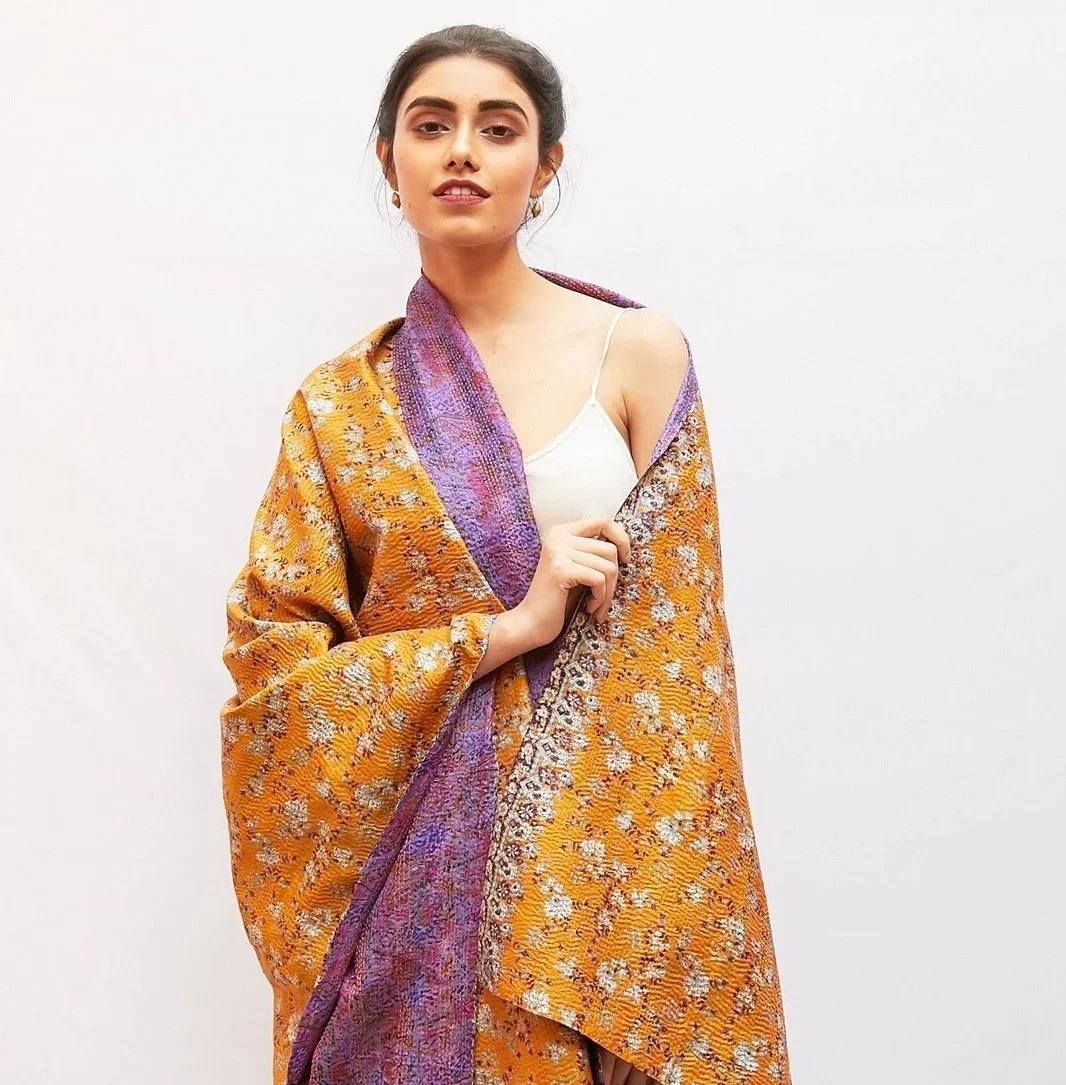
Kantha scarf Jewelled Buddha
Kantha in the Modern World
These days, kantha has found a new stage — on runways, in interiors, in wardrobes far from Bengal. Well-known designers have brought kantha into contemporary fashion, transforming it into jackets, stoles, quilts, and statement pieces for modern homes.
But with visibility comes responsibility.
Popularity has opened doors for artisans, but it's also opened the door to exploitation — mass-produced imitations, underpaid workers, and kantha sold with no real credit to the hands that made it. That's exactly why fair pay, transparency, and honest sourcing matter so much. Kantha isn't just a look. It's a livelihood.
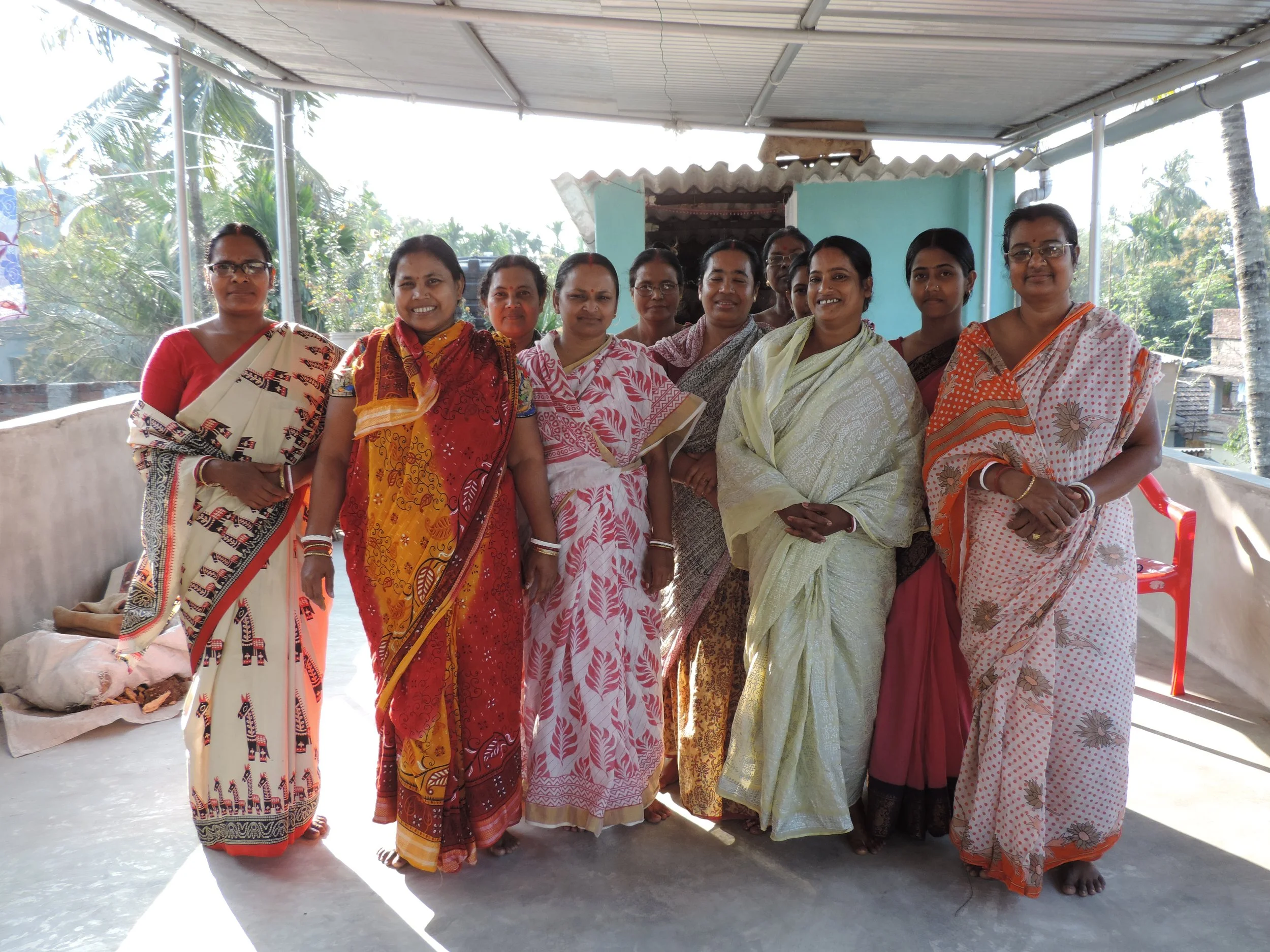
These ladies hand stitch our Kantha scarves
Why Kantha Still Matters Today
At its core, kantha embroidery has always been about turning one thing into another — old fabric into warmth, hardship into beauty, an ordinary afternoon into something that outlives the person who made it.
It isn't a trend. It's resilience stitched by hand, passed down through generations, carrying quiet resistance in every line of thread.
When you choose an authentic, ethically made kantha piece, you're not simply picking out a piece of embroidery. You're choosing heritage over mass production, story over surface, and human hands over machines. You’re enabling rural artisans to balance home life and earn an income that puts their children through school and allows craft communities to thrive.
Our Kantha Scarves: A Piece of the Story You Can Wear
Every scarf in our collection is made by kantha artisans in West Bengal — and this isn't secondhand knowledge. I’ve travelled there, met the women and their families and seen firsthand the care that goes into every piece.
Each scarf is crafted from two layers of hand-picked vintage sari silk, brought together with fine, decorative kantha running stitch across the entire surface. The result is a lightly quilted scarf that feels as good as it looks — soft, textured, and full of character. Look closely and you'll even find the artisan's own embroidered signature stitched in the corner - a personal touch that carries her story with it. One-of-a-kind, no two scarves are the same. Once they’re gone, you’ll never be able to buy the same combination of colours again. They’re that special! Plus, any offcuts left over are again upcycled into our sari bead necklaces. That’s our commitment to zero waste and sustainability.
Ready to wear a piece of this story? Shop our kantha scarves