
The Art of Shibori Itajime In India: How Our Shibori Silk Scarves Are Made
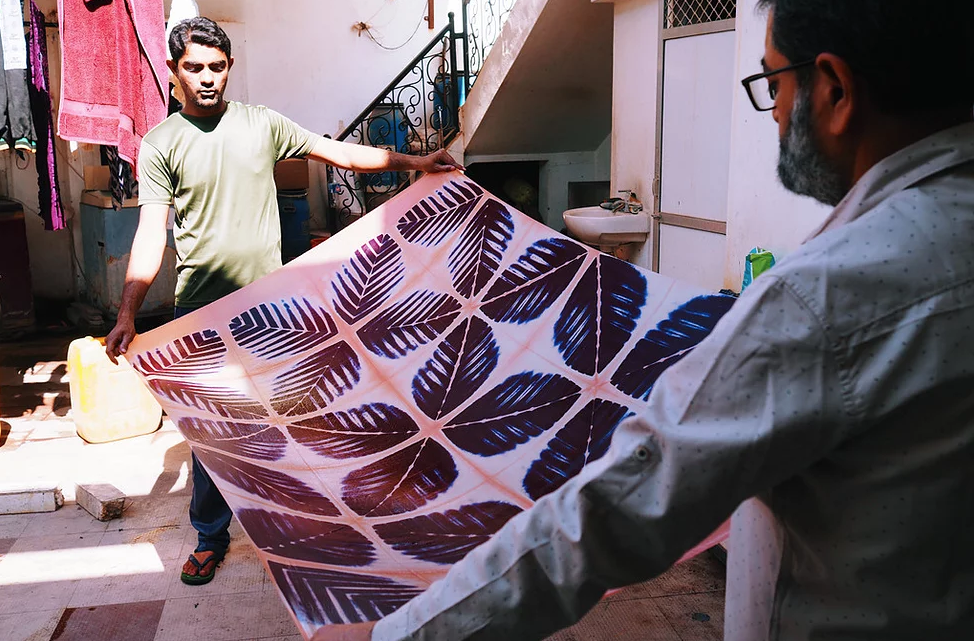
A handmade Shibori scarf is opened up to reveal a striking design
In the sun-drenched landscape of Bhuj, Kutch, an extraordinary textile revolution is unfolding. Here, the age-old Japanese craft of Shibori Itajime meets the vibrant heritage of Indian handloom. At the heart of this artistic fusion are Abduljabbar and Abdullah Khatri, the visionary brothers behind SIDR Craft.
Celebrated internationally as the Shehenshahs of Shibori (Kings of Shibori), these master artisans are redefining slow fashion. By breathing new life into traditional resist-dyeing, they create the ultimate accessory of modern luxury: the exquisite, sustainable shibori silk scarf.
What is Shibori Itajime?
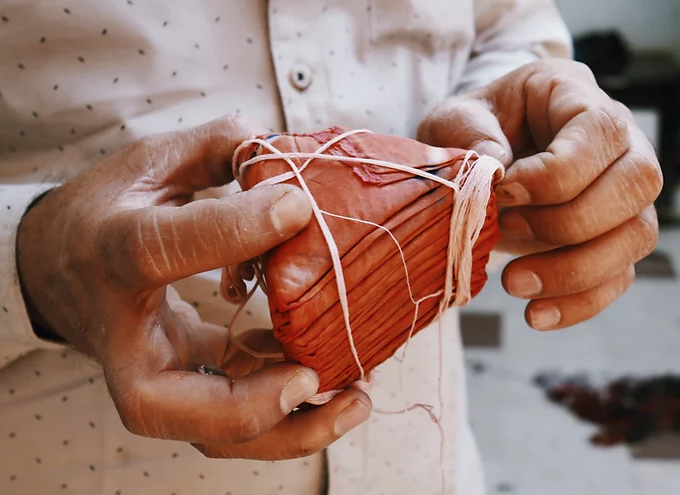
The process of Shibori Itajime resist dyeing
Shibori Itajime is a traditional Japanese shape-resist dyeing technique that translates literally to wood-clamping. The process is a captivating dance of mathematics, patience, and vibrant color. To begin, an artisan meticulously folds high-quality silk or cotton into accordion-like pleats, forming precise grids oftriangles, squares, or rectangles.
Once folded, the fabric is sandwiched tightly between two wooden blocks and secured with heavy-duty clamps. When submerged in the dye bath, the clamped areas resist the pigment, leaving behind sharp, pristine white borders and striking, multi-colored geometric patterns. The resulting hand dyed scarves are distinct, layered masterpieces where no two pieces are ever truly identical.

Colourful Shibori silk scarves hang to dry after being resist dyed
The Khatri Legacy: Rebuilding with Natural Dyes
The journey of the Khatri brothers is as resilient as their textiles. Having co-founded SIDR Craft in 1992 to preserve the ancient art of Bandhani, their workshops and livelihoods were devastated by the catastrophic 2001 Kutch earthquake. Out of the rubble, however, came a profound transformation. Participating in natural dyeing workshops inspired the brothers to abandon cheap, synthetic chemical dyes.
They pivoted completely to high-end artistic craftsmanship, using eco-friendly, organic pigments extracted from madder root, indigo, pomegranate rind, and iron. Today, SIDR Craft is a celebrated, UNESCO Seal of Excellence-winning social enterprise. They employ 200 to 300 skilled women artisansacross eight rural villages in Kutch. This initiative allows these women to work flexibly from their homes, securing a transformational income that builds local financial independence.
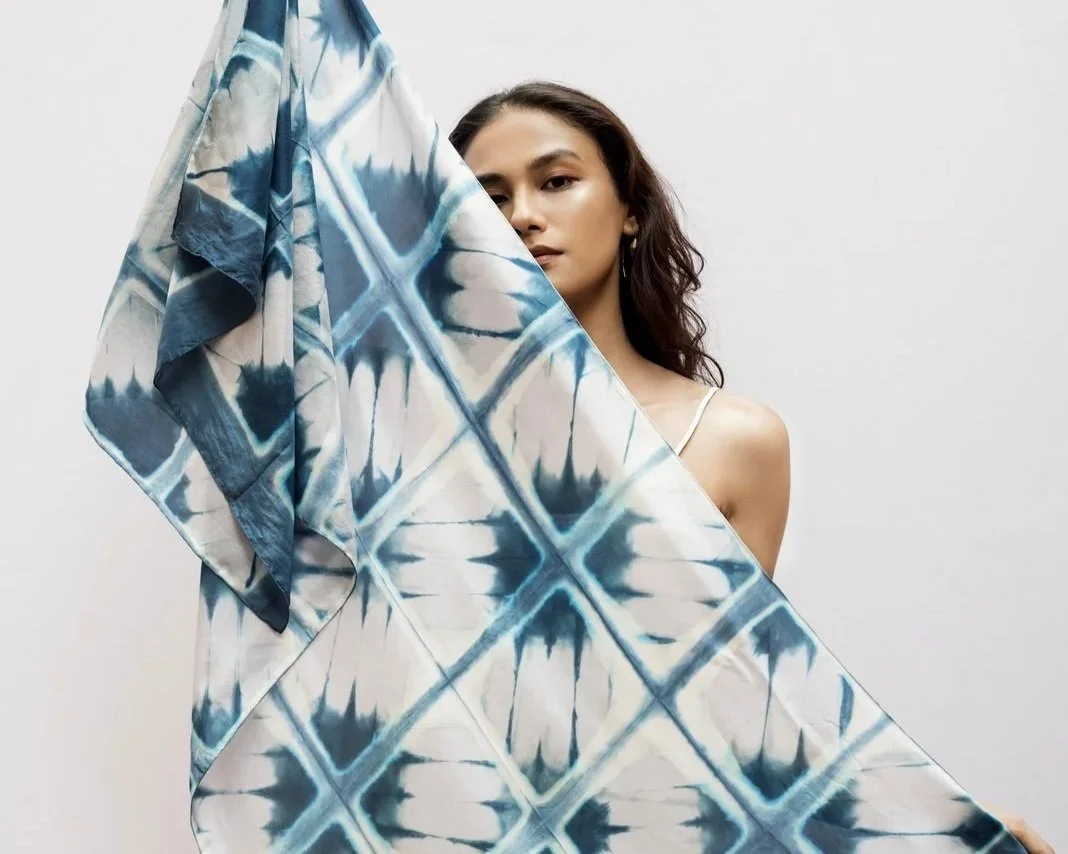
A striking geometric Shibori silk scarf
Why Choose a Shibori Silk Scarf?
In an era of mass-produced fast fashion, a shibori silk scarf stands out as a wearable work of art. These luxurious hand dyed scarves offer a multitude of benefits: Every piece is dyed by hand using 100% natural, plant-based dyes that are gentle on the Earth, biodegradable, and completely safe for your skin.
Master Craftsmanship: The impeccable alignment and sharp, complex geometry of the Khatri brothers Itajime work are highly prestigious, earning them international acclaim and a UNESCO Seal of Excellence.
Timeless & Versatile Style:
Whether draped elegantly over an evening gown or styled casually with a linen shirt, these scarves represent a deep connection to sustainable cultural heritage and slow fashion.
Embrace the Beauty of Slow Fashion
Owning a Shibori Itajime piece is more than an aesthetic choice; it is an active investment in cultural preservation, slow fashion, and artisan empowerment. Elevate your personal style with a luxurious shibori silk scarf and wrap yourself in the rich, natural, hand-dyed hues of Shibori.
Explore our selection of ethical hand dyed scarves.