How Your Hand-Block Printed Kaftans Are Made
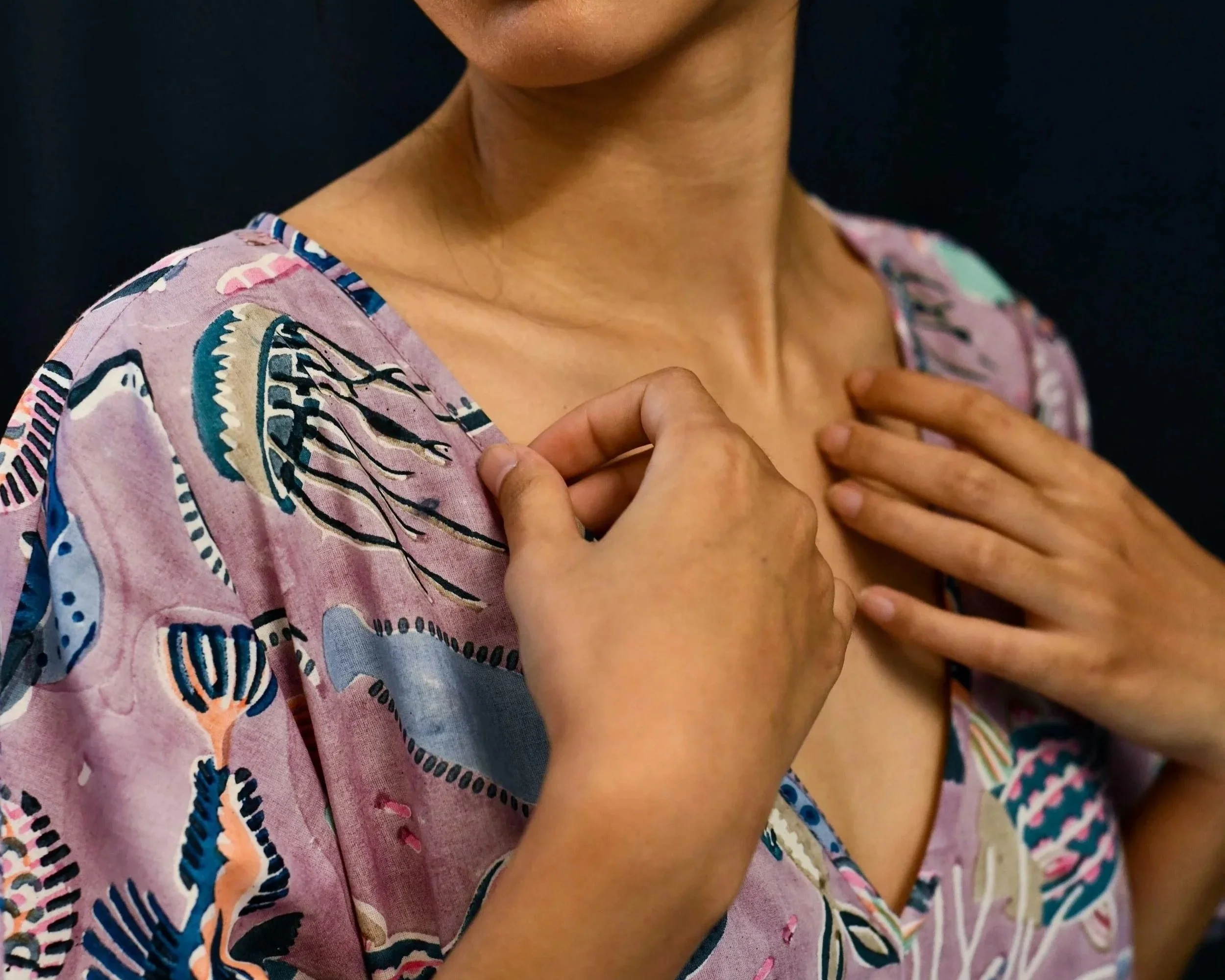
Cotton block printed kaftan dress
Imagine slipping into a garment that’s as soft as a sea breeze, carries the vibrant beauty of the ocean, and holds the legacy of centuries-old craftsmanship.
Our block print cotton kaftans are more than just effortless beachwear—they’re wearable works of art. Every thread tells a story of dedicated artisans, meticulous hand-carved woodblocks, and an eco-friendly mission to heal our oceans.
Whether you’re dreaming of wandering through sun-drenched coastal villages or looking for the perfect transition piece from a sunny beach to a seaside dinner, here is your insider guide to the magical world of hand-block printed kaftans. Discover how they’re made and what makes them so special.
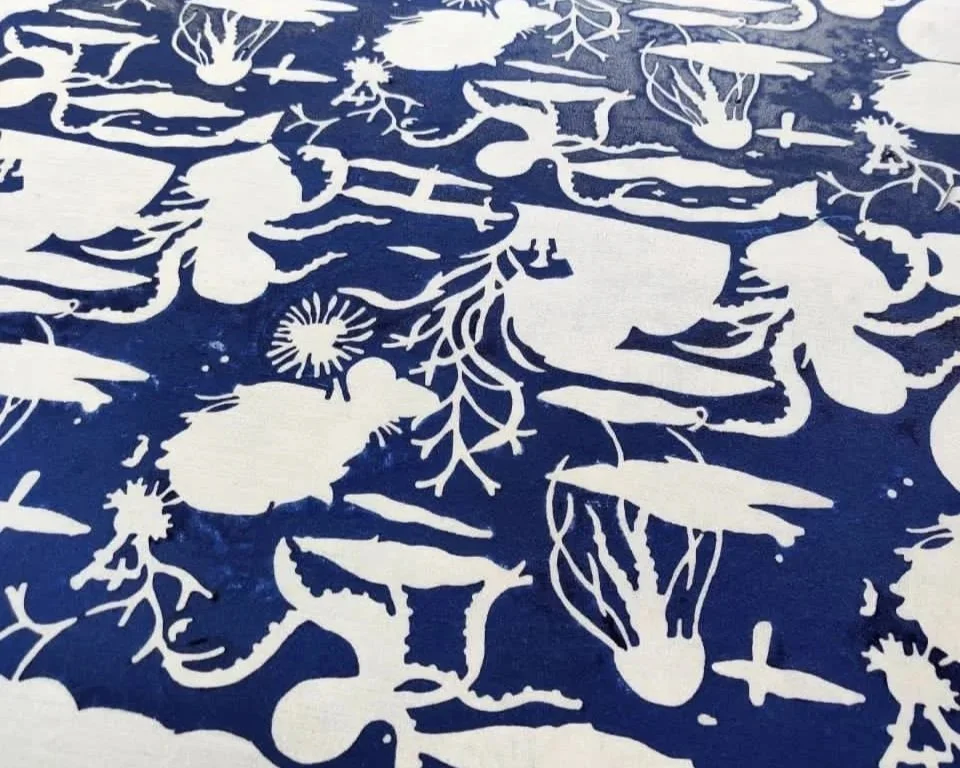
Background colour and pattern created by Gadh block
The Master Craft: How Hand-Block Printing Comes to Life
This ancient Indian craft is built upon three foundational wooden blocks, carved by hand on sustainable, native teak wood:
Gadh (The Background Block): This block carves out negative space. When stamped onto the fabric, it lays down the rich background colour, leaving white or base-colored spaces that the other blocks will fill in.
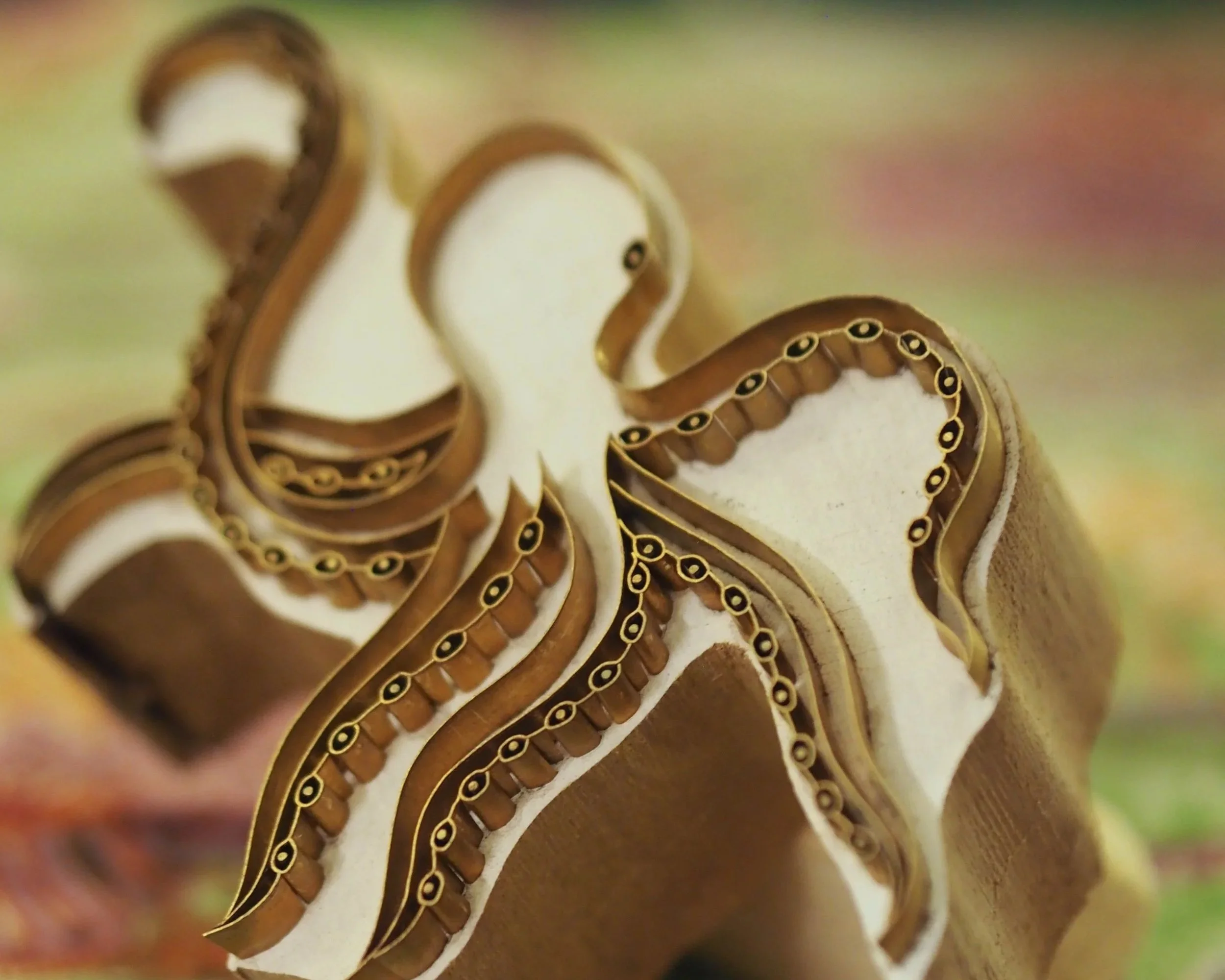
A Rekh block print that creates the outline nautical shapes of our kaftans
Rekh (The Outline Block): Taken from the Hindi word for "line" (rekha), the Rekh block is used to stamp the crisp, clean outlines of the design. For incredibly sharp and detailed lines, artisans sometimes use blocks where the design is shaped from hand-bent brass strips.
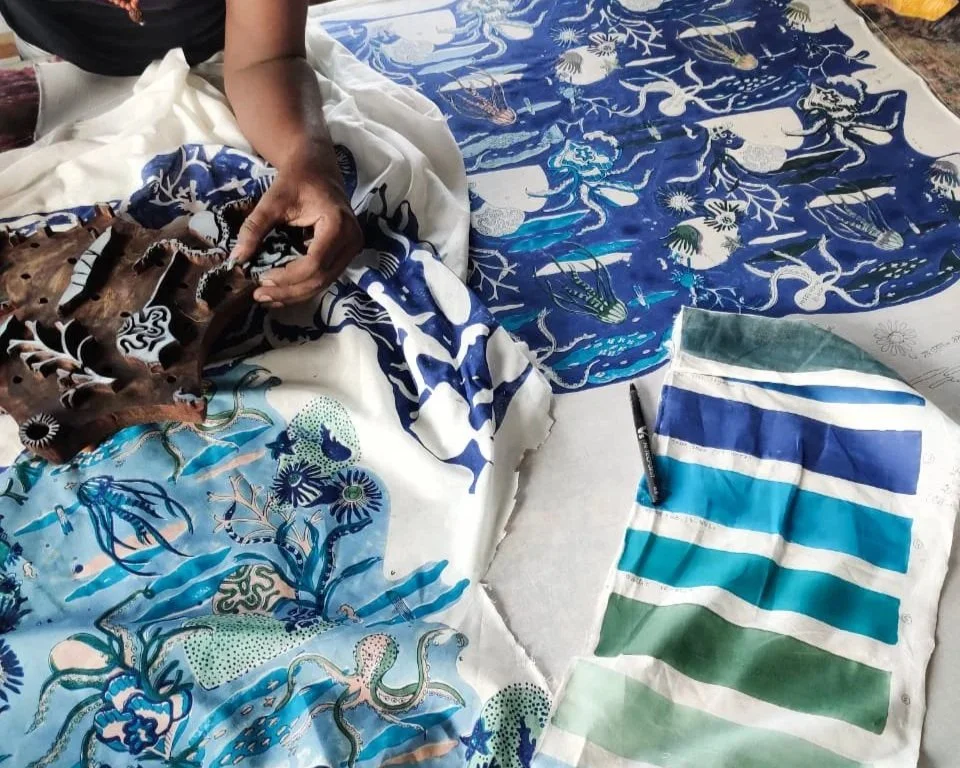
Artisan using a carved wooden block to add colour to the layered designs
Datta (The Filler Block): This block is used to stamp the vibrant fillings of color within the outline.
To make a single block print garment, wood carvers chisel these blocks with small hammers. The blocks are then soaked in mustard oil for several days to preserve the wood, ensuring they can be used for decades.
Once the blocks are ready, the artisans layer them one over the other with perfect, intuitive alignment. In our collections, we use up to 12 different blocks layered over each other to create designs of immense depth and color harmony. It takes days of precise color sampling and printing to achieve the beautiful, whimsical balance of colors and shapes that eventually ends up in your wardrobe.
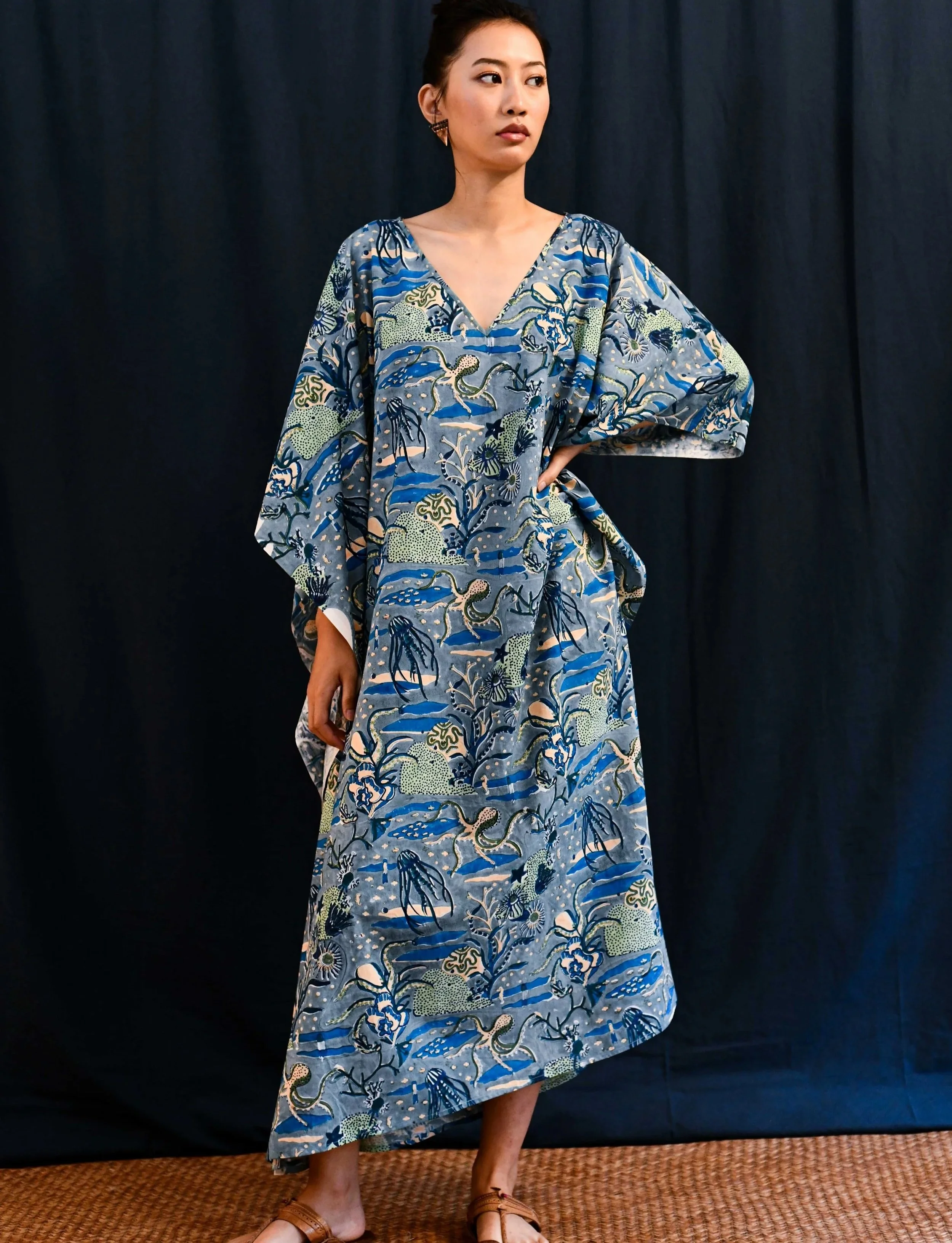
Ocean print block print cotton kaftan
What Makes Our Block Print Kaftans So Special?
When you choose one of our kaftans, you are choosing high-quality, sustainable fashion that respects both the makers and the planet. Here is what makes each piece a wardrobe treasure:
Effortless styling meets complete comfort: Lightweight, breathable and easy to style, our cotton kaftans look and feel beautiful. They reduce the decision fatigue we all have around what to wear and is a stylish, multi-functional piece that travels well and can be worn at home as well as away.
Artisan Craftsmanship: Each kaftan is lovingly handmade by skilled artisans. Your purchase supports these traditional artisan livelihoods and keeps this ancient craft thriving.
Ultra-Soft Cotton: Crafted from 100% super soft, lightweight cotton, our kaftans offer ultimate breathability and comfort. It’s the perfect, breezy fabric for warm, sunny days or lounging.
Ocean-Inspired Designs: Featuring gorgeous colorways like our sea green nautical print, our designs combine layers of vibrant hues with playful, quirky ocean-life characters.
A Real Ecological Impact: We believe fashion should give back. Through our partnership with the environmental platform Greenspark, every single kaftan purchase directly helps remove plastic pollution from our oceans. One of the projects Plastic Bank®, helps build ethical recycling ecosystems in coastal communities and create positive economic opportunities for local collectors. From the 21st Sept 2026, all new plastic recovery we support through Greenspark, will be delivered in partnership with CleanHub. They focus on hard-to-recycle plastics that are often overlooked by traditional recycling systems and would otherwise be at high risk of entering the environment. They offer end-to-end traceability and are independently verified using the ISO 14064-3 standard.
Want to know how to style a kaftan? Read my latest blog on 3 ways to style a kaftan or click on our small batch collection of kaftans.