
Ajrakh Block Printing Workshop With Master Artisan Sufiyan Ismail Khatri
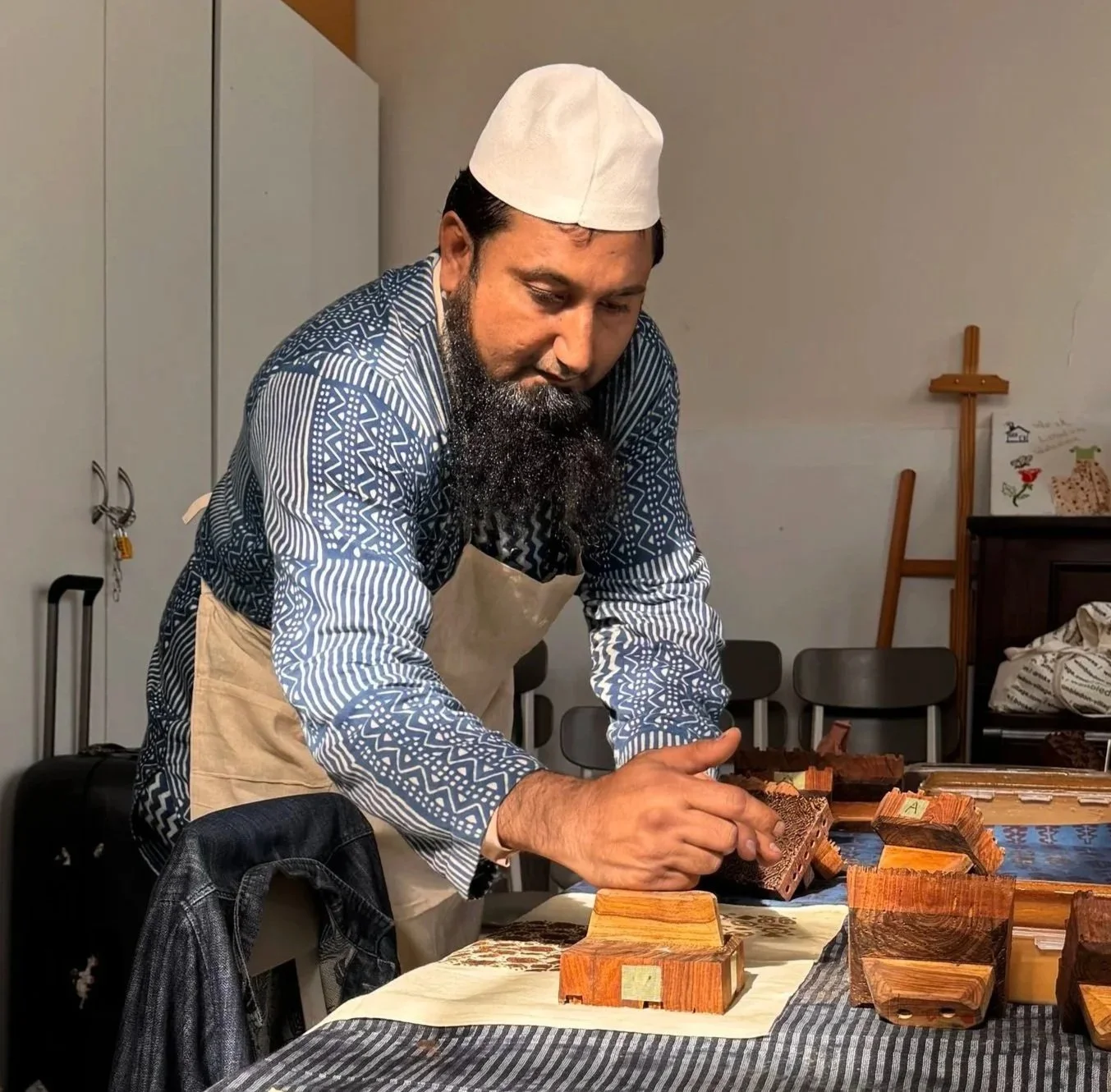
Sufiyan Ismail Khatri - 10th generation Ajrakh master artisan taking a London workshop
Recently i was honoured to go to a workshop in London where a real life master artisan from India shared his knowledge of Ajrakh block printing. I’ve always loved this particular textile craft with it’s complex layered patterns and geometrical designs, so i was excited to say the least. Plus it saved me a few bob travelling to Chiswick rather than jumping on a plane all the way to to India!
Organised by the lovely Sian from India Woven Travel, it was an inspiring day of learning the process and history of Ajrakh with Sufiyan Ismail Khatri - a 10th generation master artisan from Gujarat, India.
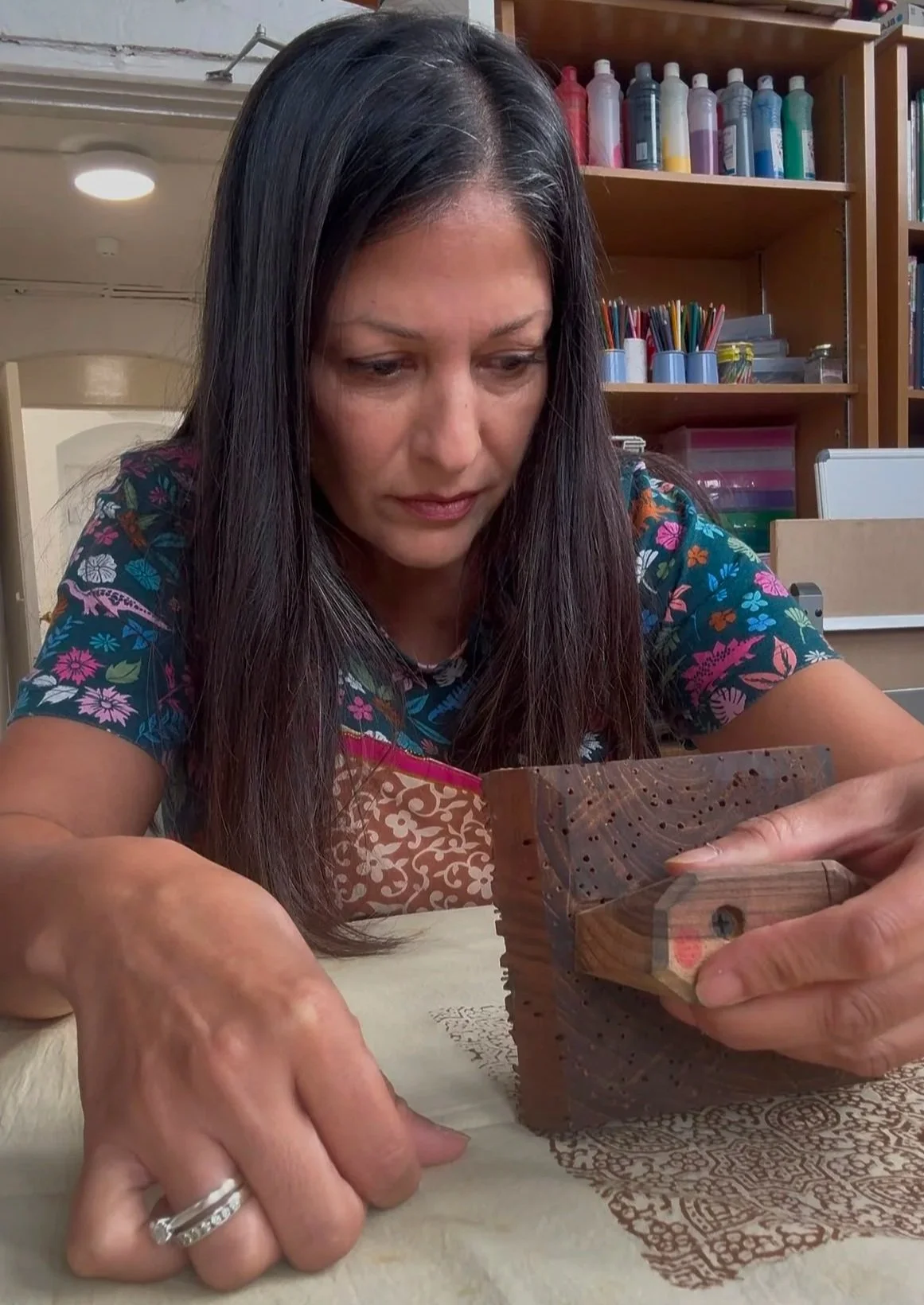
The concentration is real!
A 4,000-Year Legacy: The Ancient Origins of Ajrakh
The day started with us all introducing ourselves to Sufiyan Ji. For me it felt like meeting a celebrity as he is renowned world wide for his artistry. There were no airs and graces on his part though. In fact he was such a humble and grounded man who probably didn’t realise how thrilled we all were by just meeting him!
After all the excitement, it was time to get started. Sufiyan ji took us through a brief introduction of the history of Ajrakh and how his family have been crafting Ajrakh for centuries. The roots of Ajrakh block printing stretch back over four millennia to the Indus Valley civilisations, now known as Sindh, Pakistan. Today it is practiced in the Kachchh region of Gujarat, (amongst other areas) a result of migration of Khatris over centuries from Sindh. Sufiyan’s surname which is Khatri is a caste of master artisan families known for their skills in dyeing, printing and preserving Ajrakh craft. We also had an opportunity to try our hand at printing using Sufiyan’s wood blocks using natural dyes. My attempt looked gave me double vision at first because we were using 3 separate wood blocks layered over each other but it all worked out in the end!
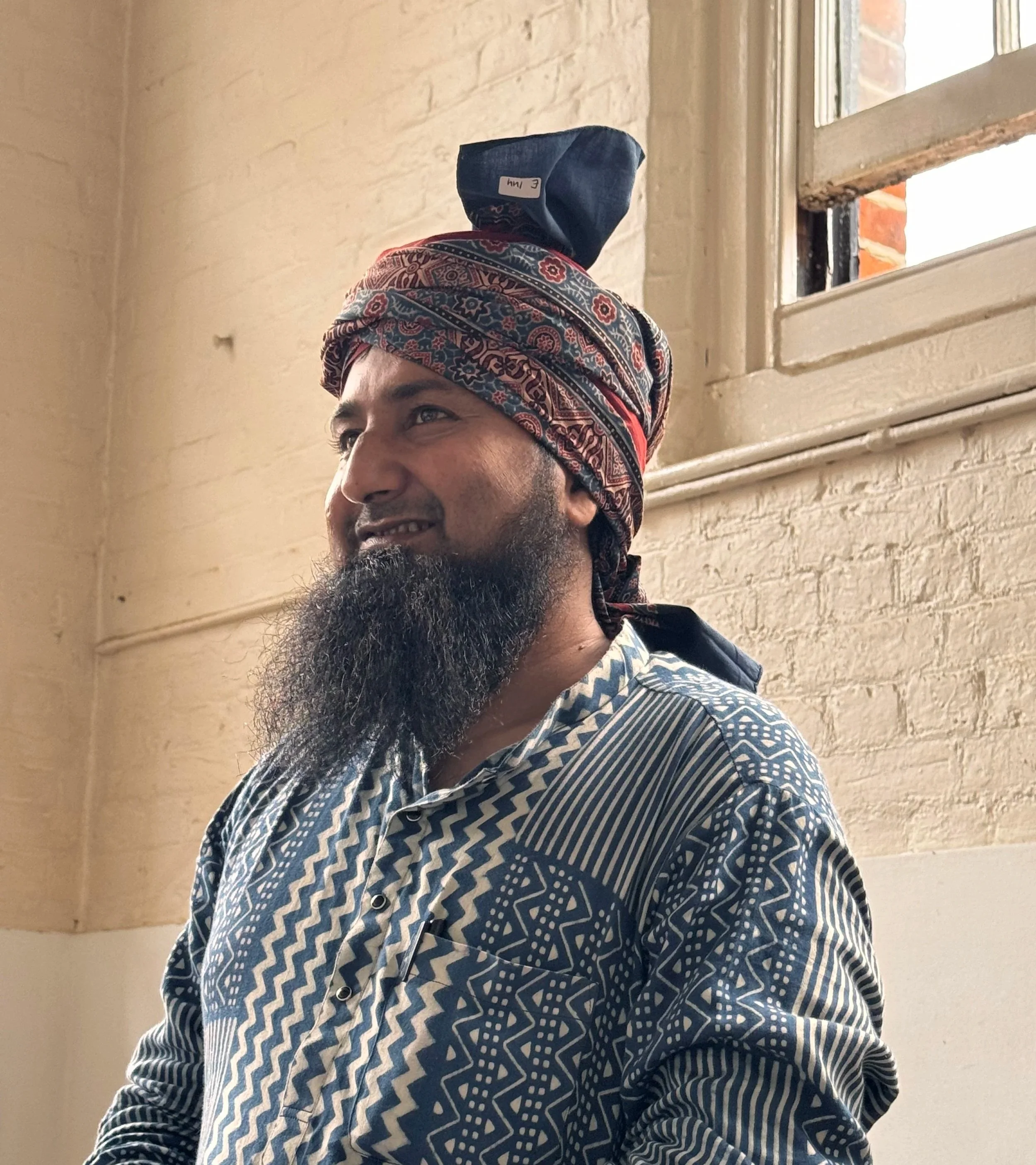
Ajrakh turban
He talked about how for centuries, Ajrakh textiles served as essential daily attire for the nomadic Maldhari cattle herders of Kutch. As he demonstrated by draping a turban over his head and a sarong around his waist, he talked about the distinct Ajrakh colours, cultural significance and practicalities of wearing this cloth in the desert.
He also talked about his grandfather Dr Ismail Khatri who was a change maker when it came to reviving Ajrakh and importantly ensuring the eco-friendly use of natural dyes and sustainable use of water.
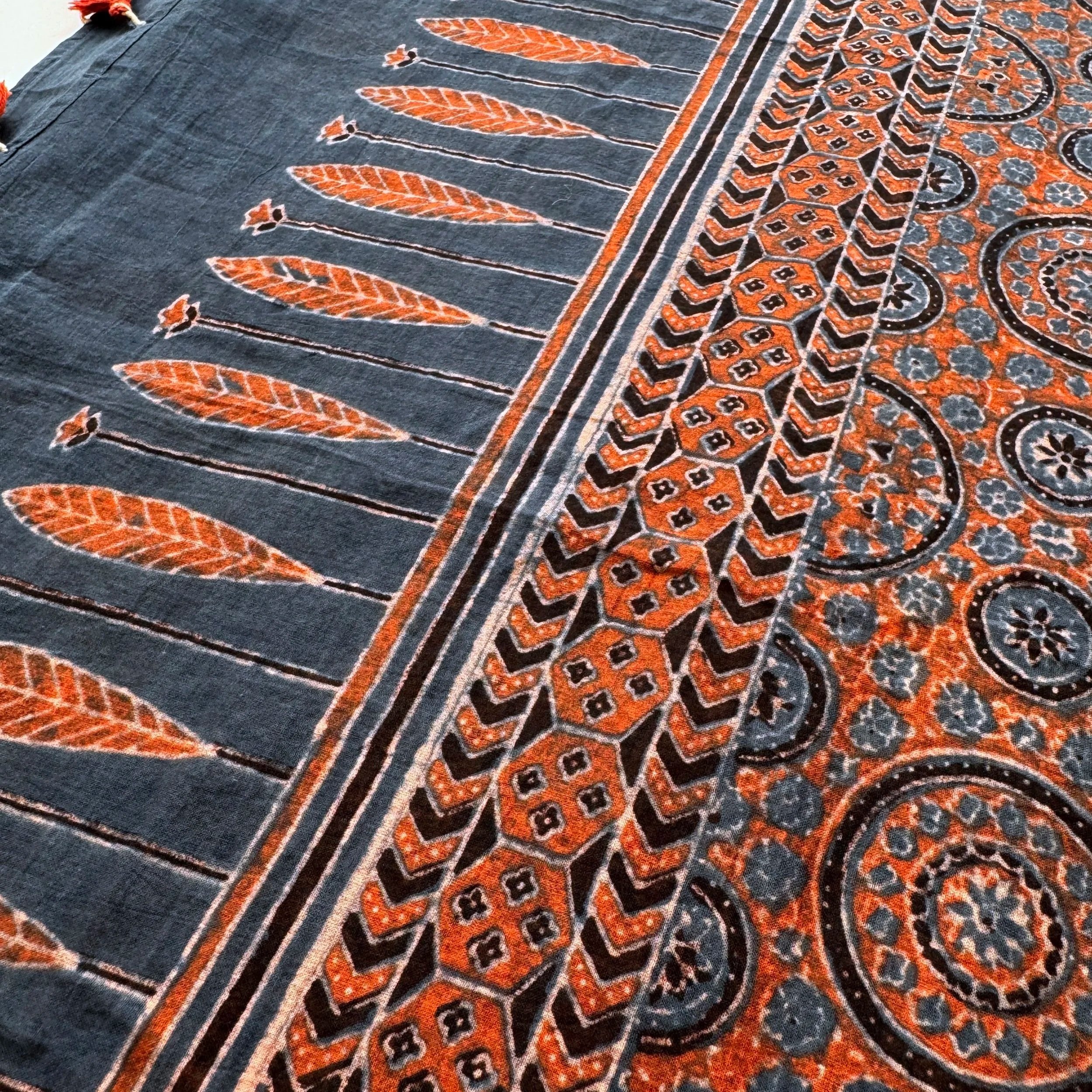
Colourful Ajrakh print on handmade Ajrakh shawl
16 steps of patience to beautiful cloth
What sets authentic Ajrakh apart is its complexity and the fact that it’s dyed on both sides. A single length of Ajrakh fabric goes through a 16-step process of washing, resist printing, natural dyeing, and sun-bleaching that can take up to a month to complete. This is the ultimate definition of slow fashion.
Firstly, cotton cloth is pre-treated using castor oil and soda ash to open the fabric’s pores, followed by a base dye of myrobalan or the powdered bark of the indian gooseberry. This allows it to absorb natural dyes. Secondly, artisans stamp intricate patterns onto the cloth using hand-carved teak wood blocks and a special resist-paste made of mud, lime, and gum arabic. This shields the white patterns from the dye. Then a labour intensive cycle of precision printing, dyeing and and sun drying and resting begins.
Every step done by hand. Every colour natural. Blue from the Indigo plant. Red from madder root. Dark greens and yellows from pomegranate skins and turmeric. Browns from Rhubarb. Purple from logwood and black from iron.
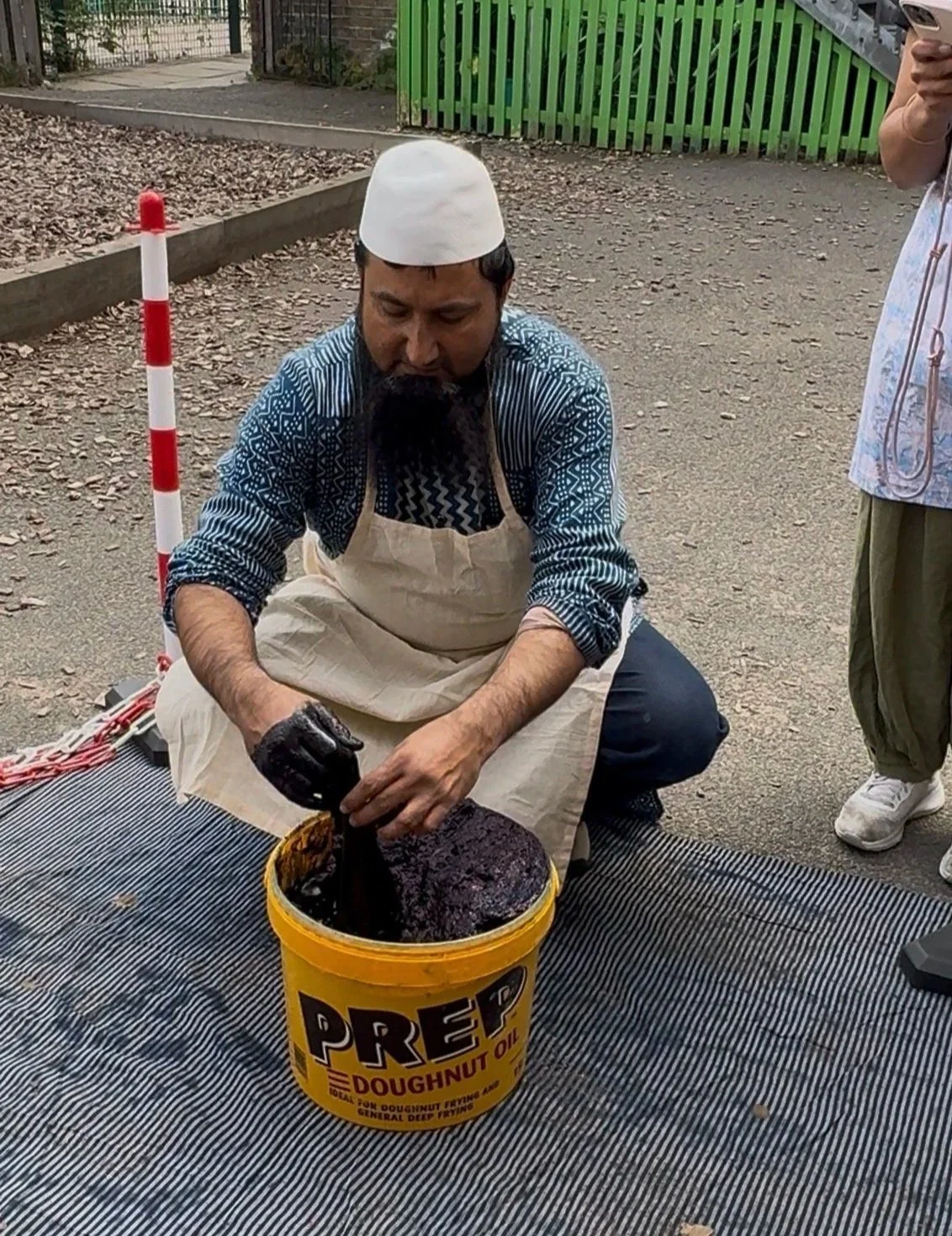
Sufiyan Khatri Ajrakh block print workshop London
Sufiyan Ismail Khatri: The 10th-Generation Guardian of Ajrakh
In the purpose-built artisan village of Ajrakhpur, near Bhuj in Gujarat, Sufiyan Ismail Khatri continues the sacred work of his forebears. As a 10th-generation master blockprinter, Sufiyan inherited not just a craft, but a solemn responsibility to keep an ancient heritage alive in the modern world.
Sufiyan’s relationship with Ajrakh is deeply intuitive. He understands the subtle chemistry of indigo vats in a way that defies industrial formulas—knowing precisely how ambient desert temperatures, water quality, and humidity influence the bond between plant dye and organic cotton.
When modern industrialization threatened to replace natural dyes with cheap screen prints during the late 20th century, Sufiyan and his family made a courageous choice. Rather than compromise on quality, Sufiyan dedicated his life to restoring absolute reverence to pure natural dyes and traditional hand-carved teak blocks.
Bridging Heritage and Modern Fashion
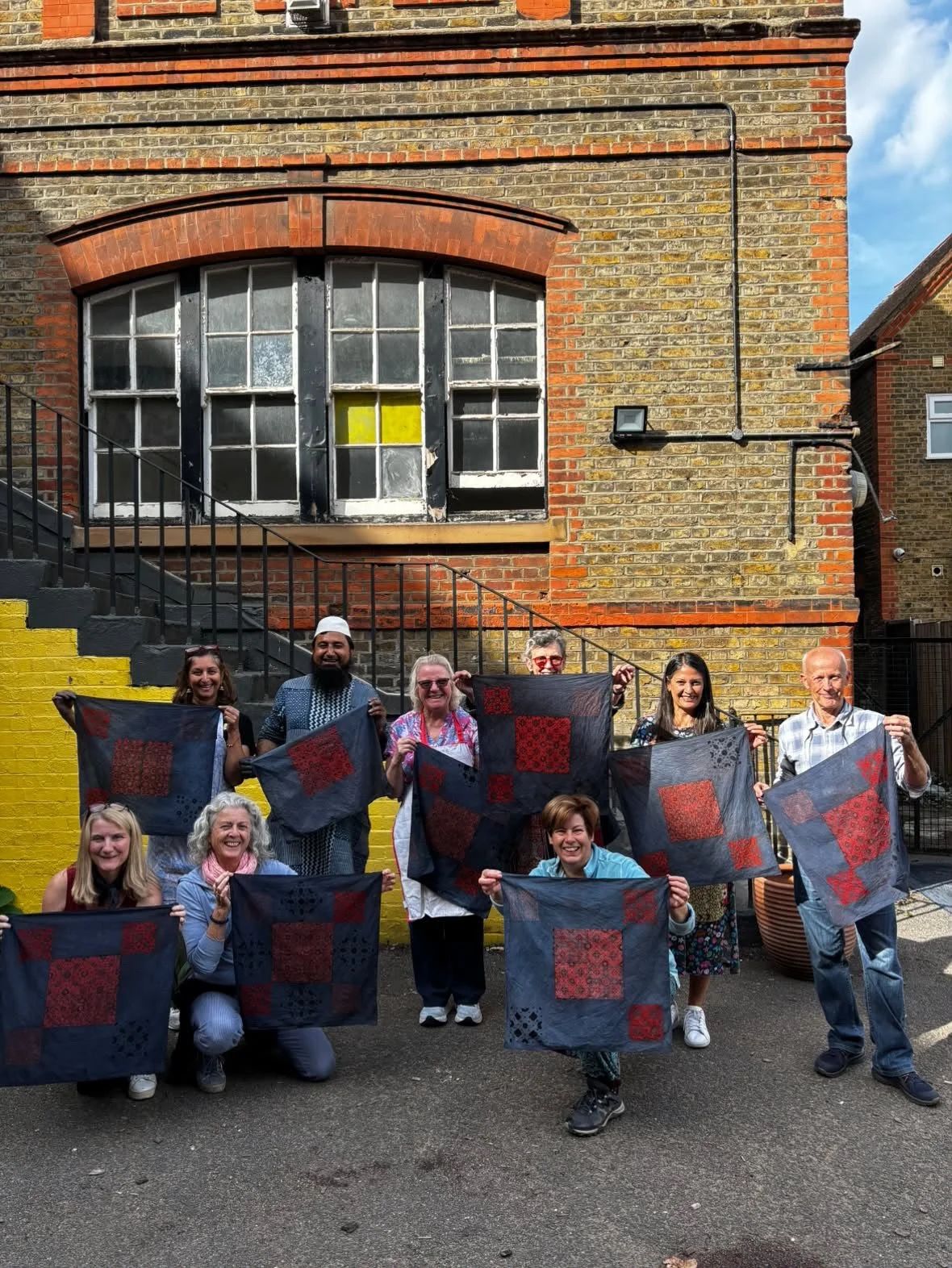
Our Ajrakh creations during the London workshop
Under Sufiyan’s stewardship, Ajrakh has expanded beyond traditional desert attire into global fashion. His work has gained worldwide acclaim, featured in prestigious international platforms such as the International Folk Art Market (IFAM) in Santa Fe, UNESCO heritage showcases, and high-fashion collaborations with renowned Indian couturiers like Tarun Tahiliani.
Yet, despite international honors, Sufiyan remains grounded in Ajrakhpur. His mission is to ensure that every handmade textile instills dignity for artisan families while offering wearers a tangible human connection. As Sufiyan eloquently notes, his ultimate hope is that when someone wraps an Ajrakh cloth around themselves, "they feel that someone was completely present when they made it."
For me it was a wonderful and rare opportunity to learn from one of India’s most respected master craftsman.
Do share this blog with someone who loves textile craft.